
Nemanjić
Serbian medieval dynasty
- Bearer
- Nemanjić dynasty
- Titles
- Grand Župans, Kings, Emperors
- Period
- 1166–1371.
- Endowments
- Studenica, Hilandar, Žiča, Gračanica
- Patron saint's day (Krsna slava)
- Holy Archdeacon Stephen
Blazon
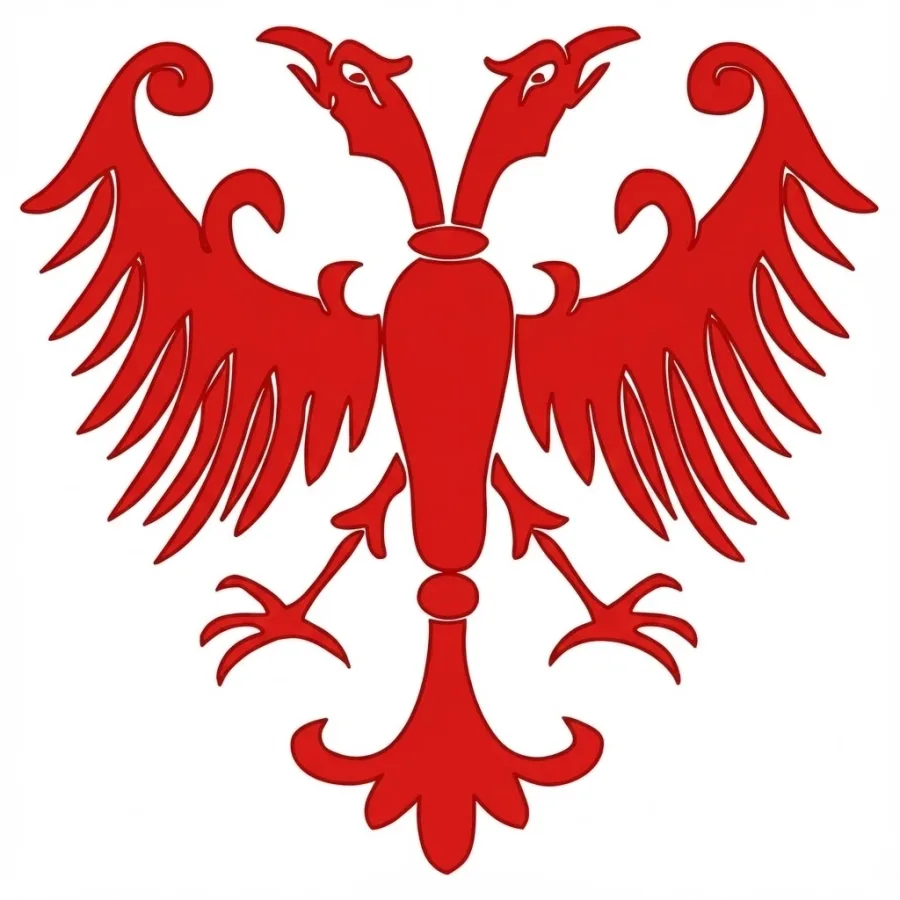
On a red field a silver (white) double-headed eagle rising, armed gold (beak and claws) and with a gold tongue. The eagle is shown fully and symmetrically displayed.
During the thirteenth century (the time of Stefan the First-Crowned) a red eagle on a silver field is recorded. The final inversion to a silver eagle on a red field became established in the time of Emperor Dušan.
The shield is often surmounted by a closed royal/imperial crown with lilies.
A gold cloth showing a red double-headed eagle (according to the portolan charts) or a white eagle on a red ground (according to reconstructions).
Symbolism and meaning
The arms of the Nemanjić dynasty, a silver double-headed eagle on a red ground, are the foundation of Serbian state heraldry. Serbian rulers took this motif from Byzantium, symbolising by it spiritual and temporal authority, as well as claims to imperial dignity.
According to tradition, Ana, wife of Stefan Nemanja and daughter of the Byzantine emperor Romanos IV, “brought the white eagle to Serbia in her dowry as an imperial symbol”.
Through history the colours varied. While a red eagle on silver prevailed in the time of Stefan the First-Crowned, in the time of greatest power under Stefan Dušan (1331–1355) the colours were inverted. A silver eagle on a red field then became established, in clear contrast to the Byzantine black eagle on a gold field.