
SH-P-0078-01Medin
Counts Medin of Paštrovići
- Registration code
SH-P-0078- Bearer
- The comital family of Medin
- Origin
- the Medin brotherhood within the Dabković tribe of Paštrovići; Kaštel Lastva and Budva
- Title
- counts; confirmed by the Republic of Venice and, in 1818, by the Austrian emperor
- Ancestor according to tradition
- Datajko Medin
- Notable members
- Count Tommaso Medin (1725–1787), Count Antonio Medin (1857–1930)
According to family tradition, the Counts Medin descend from the Bosnian nobles Sladojević, and regard as the founder of their line the legendary Datajko Medin, who received from Emperor Dušan the banate over Paštrovići and in Kaštel Lastva, today’s Petrovac na Moru. The Medin brotherhood belonged to the Dabković tribe of Paštrovići, with its home houses in and around Kaštel Lastva, and a branch of the family lived in Budva.
From the second half of the 17th century the Medins rose to high officer ranks in the Venetian overseas units, and through that service gained the comital title. Their nobility and title of count were confirmed by the Republic of Venice and, in 1818, by the Austrian emperor; the branches in Venice and Padua received further confirmation in later Austrian rescripts.
The family also produced Count Tommaso Medin (1725–1787) of Budva, a writer and translator of Voltaire mentioned by Giacomo Casanova in his memoirs, and Count Antonio Medin (1857–1930), professor and philologist in Padua, author of a work on the history of Venice in poetry.
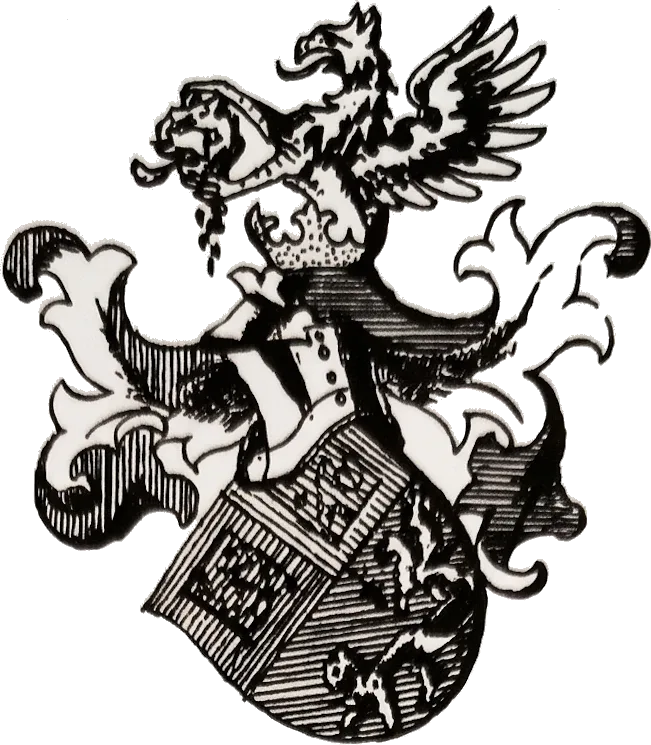
Blazon
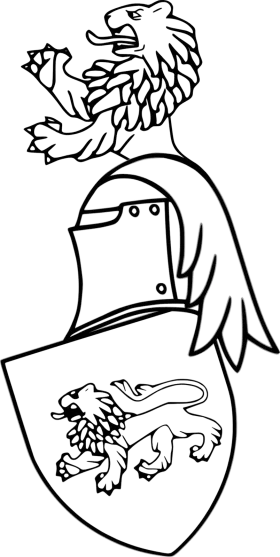
Per fess, the chief per pale azure and gules, the base vert; a lion passant argent and, to its sinister, a griffin rampant argent holding a sword.
Crowned.
A demi-griffin argent holding in its claws a lion’s head argent, dripping blood.
Dexter argent and gules, sinister argent and azure.
Symbolism and meaning
The lion and the griffin, signs of strength and vigilance, are frequent in the arms of the coastal nobility; the griffin with a sword and a bloodied lion’s head in the crest speaks of the military service through which the Medins earned their comital title. Surviving drawings also show a variant of the arms with a dragon holding a sword in the crest.